
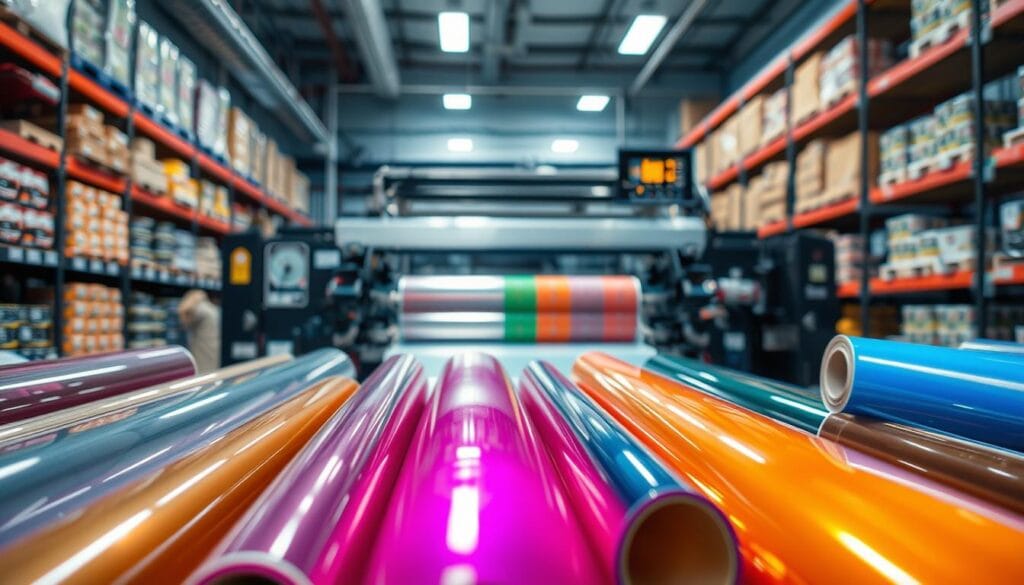
Flexible packaging solutions are now used in many fields like food, drugs, and consumer goods. They are loved for being flexible, easy to use, and keeping products fresh.
Effective utilization of these films needs a deep understanding of their features and uses. Learning how to use flexible packaging well can help businesses protect their products better. It also cuts down on waste and makes things more efficient.
Key Takeaways
- Knowing how flexible packaging film works is key to using it right.
- Many industries find flexible packaging very useful.
- Using flexible packaging correctly can make products safer and reduce waste.
- Getting good at using flexible packaging can make a business run smoother.
- Flexible packaging is very important for keeping products in good shape.
Understanding the World of Flexible Packaging Film
Flexible packaging films are key in today’s packaging world. They help keep products fresh and are used in many areas. This makes them very important.
Types of Flexible Packaging Films in Today’s Market
There are many types of flexible packaging films. Each type is made for different needs. Here are a few:
- Polyethylene (PE) films, known for their moisture barrier properties.
- Polypropylene (PP) films, which offer clarity and strength.
- Polyester (PET) films, recognized for their durability and chemical resistance.
Table: Comparison of Common Flexible Packaging Films
| Film Type | Key Properties | Common Applications |
|---|---|---|
| Polyethylene (PE) | Moisture barrier, flexibility | Food packaging, shrink films |
| Polypropylene (PP) | Clarity, strength, resistance to chemicals | Snack packaging, medical packaging |
| Polyester (PET) | Durability, chemical resistance, clarity | Beverage packaging, pharmaceutical packaging |
Key Properties and Performance Characteristics
The quality of flexible packaging films depends on several key properties. These include barrier properties, mechanical strength, and how well they seal. Experts say, “The right mix of these is key to keeping products fresh and safe.”
“Choosing the right flexible packaging film depends on the product’s needs. This includes how it reacts to moisture, oxygen, and light.”
Industry-Specific Applications and Benefits
Flexible packaging films are used in many industries. These include food, pharmaceutical, and consumer goods. They offer many benefits:
- They help keep products fresh and of high quality.
- They use less material and reduce waste.
- They make products more visible and help with branding.
Essential Equipment and Tools for Professional Film Application
Professional film application needs special tools and equipment. To get top-notch results, it’s important to choose the right gear for the task.
Heat Sealers and Sealing Technology Options
Heat sealers are key for flexible packaging film. They come in types like impulse, hot bar, and continuous heat sealers. The right sealer depends on the film type and production needs.
Impulse sealers work well for small projects or testing. Continuous heat sealers are best for big production runs. Knowing your options helps improve packaging efficiency.
Precision Cutting and Measuring Instruments
When working with flexible packaging film, precision is crucial. Measuring instruments help cut the film accurately. This cuts down on waste and packaging mistakes.
Safety Equipment and Handling Precautions
Safety is always first when using machines and film. Protective gear like gloves and safety glasses keeps you safe. Also, learning how to use and maintain equipment safely is vital.
Using the right tools and following safety rules ensures efficient and safe flexible packaging film application.
Setting Up Your Workspace for Optimal Film Processing
A well-designed workspace is key for successful Flexible Packaging Film processing. It boosts efficiency and ensures product quality.
Designing an Efficient Packaging Station Layout
Creating an efficient packaging station layout is essential. Arrange equipment and tools in a logical order. This reduces movement and boosts productivity.
Think about the workflow from unwinding the film to sealing and cutting.
Environmental Controls for Temperature and Humidity
Temperature and humidity greatly impact Flexible Packaging Film performance. A controlled environment prevents issues like film wrinkling or poor sealing. Optimal conditions are between 68°F to 72°F (20°C to 22°C) and 40% to 60% relative humidity.
Proper Film Roll Storage and Handling Systems
Proper storage and handling of film rolls are crucial. Store rolls in a dry, cool area away from sunlight. Use the right equipment to avoid scratching or creasing the film.
By focusing on these areas, businesses can optimize Flexible Packaging Film processing. This leads to better product quality and lower costs.
Selecting the Right Flexible Packaging Film for Your Specific Needs
Choosing the right flexible packaging film is important. You need to think about several key factors. This ensures the film fits your product’s needs perfectly.
Conducting Product Compatibility Assessments
The first thing to do is check if the product and packaging material are compatible. This means looking at the chemical makeup of both. Some products need special films to keep moisture or gas out.
Determining Required Barrier Properties
Every product has different needs for barrier properties. For example, food needs films that stop oxygen to stay fresh. On the other hand, medicines might need films that keep moisture out. Flexible Packaging Film with the right properties can help your product last longer.
Evaluating Sustainability Options
Nowadays, people care more about the environment. There are several green options to consider:
- Recyclable Film Structures: These films can be recycled, helping the planet.
- Biodegradable and Compostable Alternatives: These films break down naturally, offering a green choice.
Recyclable Film Structures
Recyclable films are made to be recycled. They use materials that recycling centers accept.
Biodegradable and Compostable Alternatives
Biodegradable and compostable films break down on their own. They’re great for products that harm the environment.
By looking at these factors, companies can pick a Flexible Packaging Film. It will protect their products and match their green goals.
Precise Measurement and Cutting Techniques for Film Preparation
Preparing flexible packaging film needs careful attention from the start. This includes precise measurement and cutting. The quality of the packaging depends a lot on these first steps.
Calculating Optimal Film Dimensions for Your Product
To find the best film size, think about your product’s size and shape. Also, consider any extra needs like sealing margins. Accurate calculations help cut down waste and fit the product perfectly.
| Product Dimension | Film Dimension Calculation | Additional Margin |
|---|---|---|
| Length: 10 cm, Width: 5 cm | Length + 2 cm, Width + 2 cm | 1 cm on each side for sealing |
| Length: 15 cm, Width: 8 cm | Length + 3 cm, Width + 3 cm | 1.5 cm on each side for sealing |
Step-by-Step Precision Cutting Methods
Cutting the film with precision is key to keeping it intact. The right tools and methods make a big difference in the quality of the cut.
- Use a sharp cutting blade to prevent tearing the film.
- Employ a cutting mat or other stable surface to ensure accuracy.
- Measure twice before cutting to avoid errors.
Strategies for Minimizing Material Waste
Reducing waste saves money and helps the environment. By optimizing film sizes and cutting methods, we can cut down on waste.
“Reducing waste in packaging processes is not just an economic imperative but also an environmental one. By optimizing our cutting techniques, we can minimize our ecological footprint.” – Packaging Expert
By using these strategies, businesses can make their packaging more efficient. They can also reduce waste and improve their sustainability.
Mastering Heat Sealing Processes for Secure Packaging
To get reliable packaging, you must master heat sealing. This process is key for making strong, durable packaging with Flexible Packaging Film.
Optimizing Temperature, Time, and Pressure Parameters
Heat sealing needs careful control of three main things: temperature, time, and pressure. Getting these right makes a strong seal without harming the film.
The best temperature varies by film type. For example, polyethylene films need lower temperatures than polypropylene or laminate ones.
| Film Type | Optimal Temperature (°C) | Sealing Time (seconds) | Pressure (N/cm²) |
|---|---|---|---|
| Polyethylene | 120-150 | 1-2 | 2-3 |
| Polypropylene | 150-180 | 2-3 | 3-4 |
| Laminate | 180-200 | 3-4 | 4-5 |
Single vs. Multiple Seal Application Techniques
Choosing between single and multiple seal techniques depends on the product and needed security.
Single seals work for most packaging. But, multiple seals add extra security for products needing more protection.

Troubleshooting Common Sealing Defects
Even with careful setup, sealing problems can happen. Issues like weak or incomplete seals and film burn-through are common.
Addressing Weak or Incomplete Seals
Weak or incomplete seals usually come from not enough temperature, pressure, or time. Changing these can fix the problem.
Preventing Film Burn-Through Issues
Film burn-through happens when the temperature or sealing time is too high. Lowering these or using a film that melts at a higher temperature can stop it.
By understanding and mastering heat sealing, manufacturers can make sure their packaging is secure and reliable.
Advanced Flexible Packaging Film Application Methods
New ways to use flexible packaging film are changing how we package and present products. These new methods aim to make packaging more efficient, sustainable, and friendly to consumers.
Creating Custom-Shaped and Contoured Packages
Brands are now using custom-shaped packaging to stand out. Flexible packaging film can be shaped into many forms. This makes packaging look better and uses less material.
Developing Multi-Compartment Packaging Solutions
Multi-compartment packaging puts several products in one package. This makes life easier for the buyer. It’s made possible by advanced sealing techniques and precise cutting.
Incorporating Consumer-Friendly Features
Features that make packaging easy to use are key. Two important ones are:
Easy-Open Tear Notches
These notches make it simple to open packages without tools. They’re great for items that are delicate or need care.
Resealable Closure Systems
These systems let you seal and open packages again and again. They keep food and other items fresh. This is super useful for perishables.
| Feature | Benefit | Application |
|---|---|---|
| Custom Shapes | Enhanced Visual Appeal | Product Differentiation |
| Multi-Compartment | Increased Convenience | Multi-Product Packaging |
| Easy-Open Notches | Convenient Access | Easy Product Access |
| Resealable Closures | Maintains Freshness | Food and Perishables |
Using these advanced methods, companies can make their packaging better. This meets what consumers want and what brands aim for.
Quality Assurance and Testing Protocols for Film Packaging
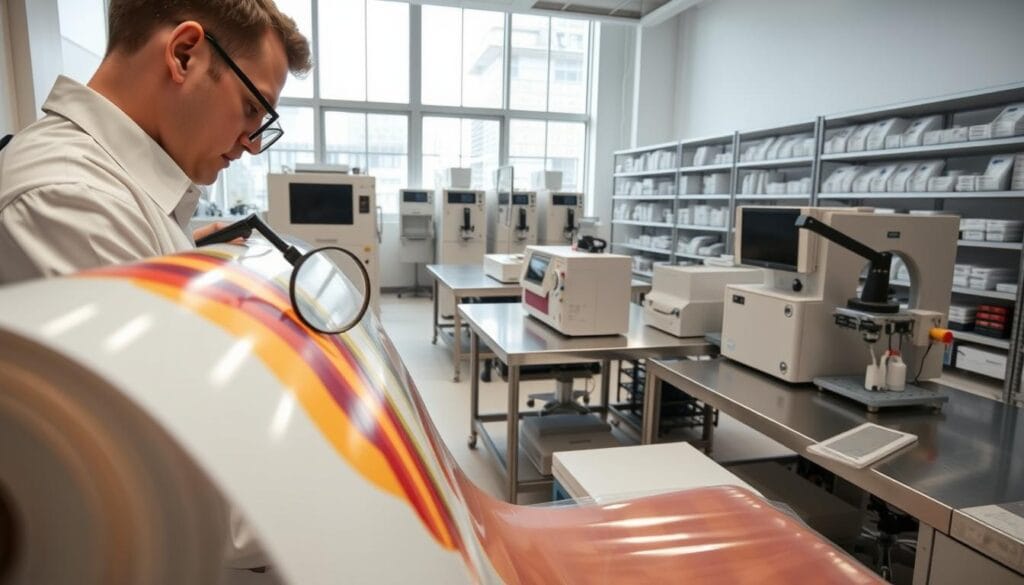
To ensure flexible packaging film works well, we need thorough testing. These tests make sure the packaging keeps the product safe and meets customer needs.
Implementing Effective Seal Integrity Tests
Seal integrity is key to stop leaks and keep packaging secure. We use leak detection and peel testing to check how strong the seal is.
Establishing Visual Inspection Standards
Visual checks help spot issues like tears, creases, or dirt. Having clear standards helps keep quality checks consistent.
Conducting Shelf-Life and Performance Validation
Shelf-life tests check if packaging stays good over time. We test it under different conditions to see if it keeps its barrier and material strength.
| Test Type | Purpose | Frequency |
|---|---|---|
| Leak Detection | Identify leaks in packaging | Daily |
| Peel Testing | Assess seal strength | Weekly |
| Visual Inspection | Detect visual defects | Continuous |
Troubleshooting Common Flexible Packaging Film Challenges
Working with flexible packaging film requires troubleshooting skills. This is because it can face issues like wrinkling, adhesion problems, and static electricity. These problems can affect the packaging’s quality.
Resolving Film Wrinkling and Surface Defects
Wrinkles and surface defects can harm the packaging’s quality. To fix these, it’s key to control the film’s tension during packaging. Adjusting the tension control helps reduce wrinkles. Also, keeping the area clean and the film free from dirt can lower surface defects.
Addressing Adhesion and Bonding Issues
Adhesion and bonding issues can cause packaging failures. To solve these, choosing the right adhesive for the film and product is crucial. Also, making sure the sealing settings are right for the film can enhance bonding.
Managing Static Electricity and Handling Problems
Static electricity can make handling the film tough. Using static-reducing devices or adjusting humidity can help. Also, handling the film gently, avoiding sudden moves or sharp bends, can prevent these problems.
Conclusion: Optimizing Your Flexible Packaging Film Process
Using Flexible Packaging Film well is key for businesses wanting to boost their packaging. Knowing the different films, picking the right one for your needs, and learning how to apply it can make a big difference. This way, companies can pack more efficiently.
Following the tips in this guide can cut down on waste and lower costs. It also ensures your packaging looks great. Adding lnled technology to heat sealing makes the process even better, giving a strong and safe seal.
With the knowledge from this guide, businesses can make their Flexible Packaging Film process better. They can find a good mix of being efficient, making quality products, and being green. This not only improves their packaging but also helps the environment.